AI in Orthopedics : Practical Use Cases Beyond Surgical Robotics

AI in orthopedics use cases reach far beyond surgical robotics. Artificial intelligence is fueling orthopedic digital transformation and care delivery. Flashy robotics get a lot of attention in AI healthcare, but real success is in orthopedic care. AI helps with orthopedic analytics. Orthopedic analytics powered by clinical decisions improves workflows. These changes boost efficiency, outcomes, and margins. Leading orthopedic organizations are implementing these scalable solutions where they count.
Why Surgical Robotics Overshadows Other AI Applications in Orthopedics
It is no surprise that orthopedic surgical robotics dominates the conversation. Robots are highly visible, tangible, and excellent for hospital marketing. However, the AI perception in orthopedics is often skewed by these machines.
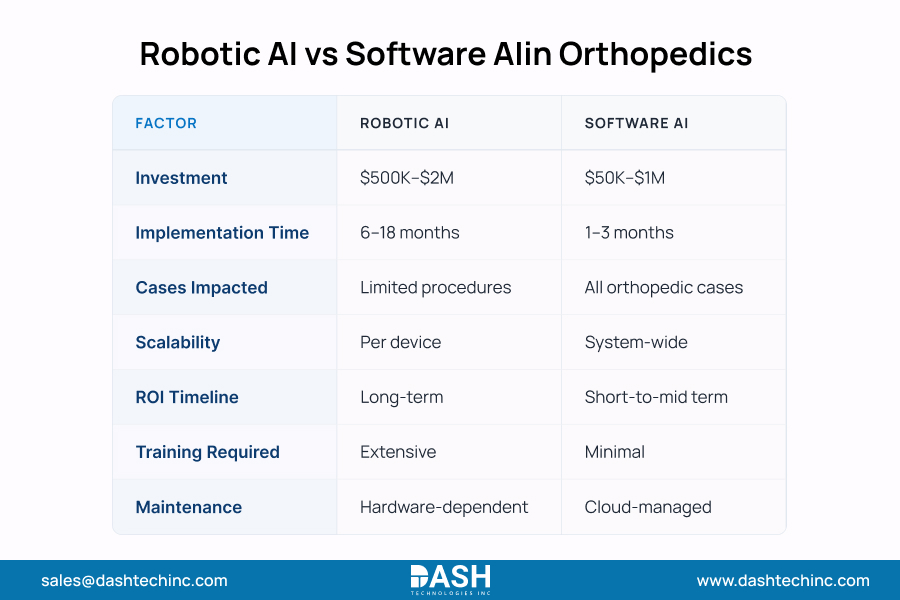
- Capital Intensity: Robotics require massive upfront investment and ongoing maintenance costs. Meanwhile, some of the most impactful orthopedic AI applications are software-based and require far less upfront investment.
- Specialization: They are often limited to specific joint procedures.
- Scalability: Software-driven, AI-focused on analytics and prediction, is far more scalable across an entire service line and requires a fraction of the hardware investment.
Where AI Actually Creates Value in Orthopedic Programs Today
AI-powered orthopedics delivers measurable value in environments characterized by high data volume and significant variability, precisely what defines modern orthopedic practices. A typical orthopedic program generates millions of data points monthly across scheduling, clinical documentation, imaging, supply chain, and outcomes tracking.
This data volume overwhelms manual analysis but provides perfect conditions for AI algorithms. Patterns that would take analysts weeks to identify emerge instantly. Predictions that relied on gut feeling become data-driven forecasts. Orthopedic AI values data because systems learn from each new case. This helps them improve accuracy and relevance over time.
The following AI in orthopedics use cases represent where leading orthopedic programs are deploying AI today, not experimental pilots, but production systems driving operational and clinical improvements.
AI in Orthopedics Use Case #1 – Surgical Planning and Case Complexity Prediction
Precision in orthopedics starts long before the first incision. AI surgical planning orthopedics uses historical patient data to move beyond “best guesses.”
- Predicting Case Duration: AI analyzes patient BMI, comorbidities, and surgeon history to predict exactly how long a case will take, rather than using a standard block average. Orthopedic case prediction algorithms look at patient traits, health issues, procedure types, surgeon habits, and facility factors. They use this information to make accurate estimates.
- Anticipating Resource Needs: Preoperative analytics can predict the specific tray requirements or implant sizes likely to be used, reducing “just in case” sterilization costs.
- Reducing OR Overruns: By identifying high-complexity cases early, managers can schedule them appropriately to prevent the “domino effect” of delays.
- Read More


Comments
Post a Comment