The Role of Data Analytics in Modern Cardiology Care Delivery

Cardiology data analytics connects big data with clinical care. It gathers information from different sources, helping to spot risks and patterns. This leads to better care. In modern cardiology, data have grown significantly. This is due to complex treatments, electrophysiology, and advanced heart failure management. Cardiology data challenges now go beyond storage; they focus on interpreting vast amounts of information.
Traditional methods won’t keep up. Monthly spreadsheets and manual audits are too slow for today’s needs. Cardiology leaders need healthcare data analytics systems to connect the entire patient journey in real time. This helps them deliver high-quality care. Understanding cardiology data analytics is essential. It improves outcomes and helps run efficient practices.
Why Cardiology Generates Some of the Most Complex Data in Healthcare
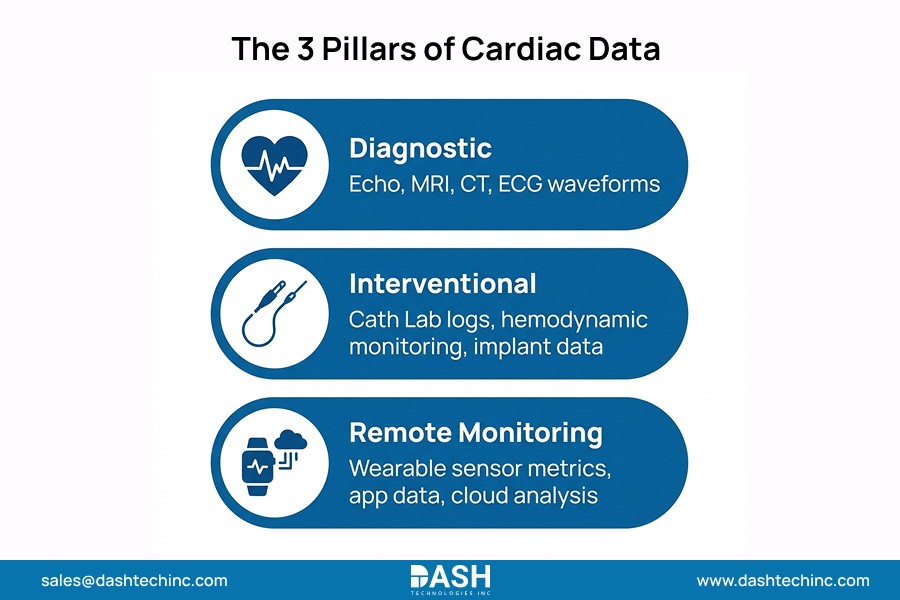
Cardiology is unique because it combines high-frequency physiological monitoring with massive diagnostic files and long-term longitudinal records.
- Data Across the Entire Care Continuum
Cardiology clinical data isn’t just in the EHR. It lives in the Cath Lab, the Echo lab, the outpatient clinic, and even in the patient’s home via remote monitoring devices. - High-Frequency, High-Volume Diagnostic Data
Cardiac imaging data includes 3D echos and cardiac MRIs. High-resolution ECGs also add to this data. Together, they are among the largest files in medicine. Traditional systems often struggle to index and analyze this information alongside standard clinical notes. - Longitudinal Patient Monitoring
Cardiology is a lifelong specialty. Managing cardiology operational data means tracking a patient from their first screening through interventions and decades of follow-up care.
The Limitations of Traditional Reporting in Cardiology
The primary issue with retrospective healthcare reporting is that it tells you what happened, not what is happening or what will happen. Cardiology reporting limitations often include:
- Static, Lagging Reports: Getting a report on April 15th about a spike in readmissions that happened in February is too late for intervention.
- Siloed Views: Clinical quality data and operational efficiency data rarely live on the same page, hiding cause-and-effect.
- Manual Effort: Relying on nurses or analysts to manually pull data into Excel is a recipe for error and burnout.
What Data Analytics Actually Means in Modern Cardiology
Cardiology data analytics is the discipline of transforming raw cardiology data into reliable, usable insight, at the right time and in the right context. In practical terms, cardiology analytics platforms typically combine four capabilities:
Healthcare Analytics Definition
Data analytics in cardiology involves four key steps:
- Gathering data from different systems.
- Normalizing and standardizing that data.
- Visualizing trends and spotting patterns.
- Creating insights that guide actions, both descriptive and predictive.
1. Data aggregation: Consolidating clinical, diagnostic, and operational data
2. Normalization + standardization: “Cleaning” data and mapping it, as well as aligning definitions (i.e., standardizing what a “readmission” is)
3. Visualization + pattern detection: Identifying trends, variation, and outliers
4. Descriptive and predictive insights: Explaining what has happened and predicting risk
How Analytics Improves Cardiology Care Delivery at the System Level
Data-driven cardiology and cardiology care optimization thrive when analytics enhance the system. This means improving workflows, coordination, and decisions. It should not create extra tasks for clinicians. The payoff is consistency: fewer avoidable gaps, less variation, and more proactive care.
- Reducing Variation in Care and Outcomes
Analytics shows how outcomes vary by site, physician group, or patient cohort. This helps leaders standardize effective practices and cut down on avoidable differences. - Supporting Earlier Risk Identification
When trends and risk signals are visible sooner, teams can intervene earlier (e.g., rising weight patterns, missed follow-ups, post-procedure risk). - Improving Coordination Across Care Settings
Analytics makes sure handoffs, like ED to inpatient, cath lab to recovery, and discharge to follow-up, don’t just rely on tribal knowledge. They depend on clear information instead. Cardiology data analytics also reduces the need for manual reminders. This improves communication and cuts down on errors. - Read More


Comments
Post a Comment