How Digital Health Platforms Are Reducing Reporting Delays in Radiology?

Radiology reporting delays slow critical clinical decisions and disrupt hospital throughput. Modern digital health radiology platforms reduce imaging report turnaround time through workflow automation, real-time visibility, and intelligent case prioritization. It can’t keep up with the large number of patients. Doctors use these files to schedule surgeries, adjust cancer treatments, manage ER trauma cases, and discharge patients efficiently. If the report is late, medical care stops.
These delays hurt the entire hospital system. They tie up valuable inpatient beds and frustrate both physicians and patients. Modern tech platforms are finally fixing these radiology workflow challenges by forcing actual radiology workflow optimization and showing managers exactly where files get stuck in real time.
To understand how structured imaging data enables transformation, read our guide on Why Radiology Data Is the Backbone of Digital Health Transformation.
Why Reporting Delays Are Common in Radiology Departments?
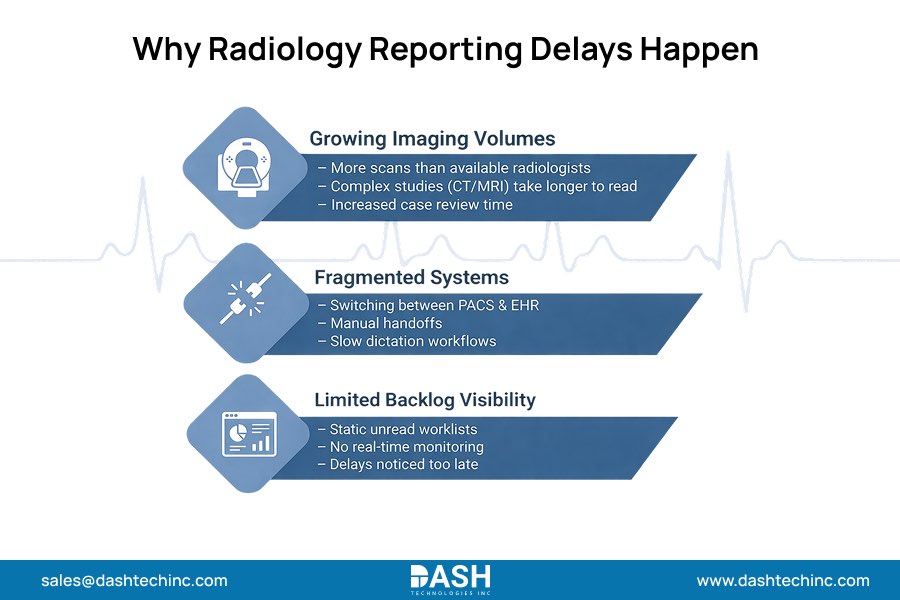
Hospital leaders must identify the exact causes of radiology reporting delays. This step is crucial before attempting to improve the entire process. Imaging departments are already overwhelmed. The breakdowns often stem from three main operational issues. These radiology workflow inefficiencies are among the most common causes of radiology reporting delays.
- Growing imaging volumes and case complexity
Rising imaging volumes combined with complex multi-slice studies significantly increase reporting turnaround time. Modern scans like multi-slice CTs and functional MRIs produce thousands of individual images per study. It simply takes a doctor much longer to review a single case now than it did ten years ago. - Fragmented systems and manual handoffs
Radiologists waste time switching between PACS and the main health record. This back and forth slows them down. Add clunky dictation software to the mix, and the workflow completely stalls. When a doctor logs into a new window or waits for a tech to send an image, they waste time. That’s time they could spend reading scans. - Limited visibility into reporting backlogs
In many hospitals, the unread study list is just a static queue. Managers cannot see when a specific area, like neuroradiology, falls behind until the backlog is already out of control.
The Impact of Radiology Reporting Delays on Care and Operations
Reporting delays are more than just operational issues. Radiology turnaround time impact hits hard on multiple fronts. They pose clinical and financial risks. Prolonged radiology turnaround time increases length of stay, reduces patient throughput, and directly impacts hospital revenue cycles.
- Delayed diagnoses and treatment decisions: When doctors wait hours for scan results, they must delay care. Reporting delays are not simply operational inconveniences—they represent measurable clinical and financial risk.
- Clinician frustration and rework: When referring doctors cannot find a report, they call the radiology desk directly or constantly refresh their screens. Sometimes they just guess and make medical decisions without the scan. This wastes the time of everyone who is involved.
- Operational inefficiencies and capacity constraints: A backed-up radiology department creates downstream bottlenecks. Emergency room waits are longer. Admitted patients stay in beds too long because they can’t get discharged. Outpatient schedules also fall apart. Imaging workflow bottlenecks cause massive bed shortages across the hospital.
- Read More


Comments
Post a Comment