Why Radiology Data Is the Backbone of Digital Health Transformation?

Radiology data digital health strategy determines whether enterprise-wide digital transformation initiatives succeed or stall.
Hospital executives usually focus on telehealth and patient apps when planning for the future. The actual work happens down in the IT department in radiology data for digital health. Organizing your network to handle radiology imaging data is the most practical step a health system can take to update how doctors work right now.
Medical imaging is involved in almost every patient’s treatment. The digital health data that radiology produces takes up massive amounts of server space, and doctors constantly rely on it to make hard calls. Any large healthcare digital transformation project depends heavily on that data being accessible. If those files are disorganized, those broader tech and AI rollouts will simply crash.
Why Radiology Plays a Central Role in Modern Healthcare?
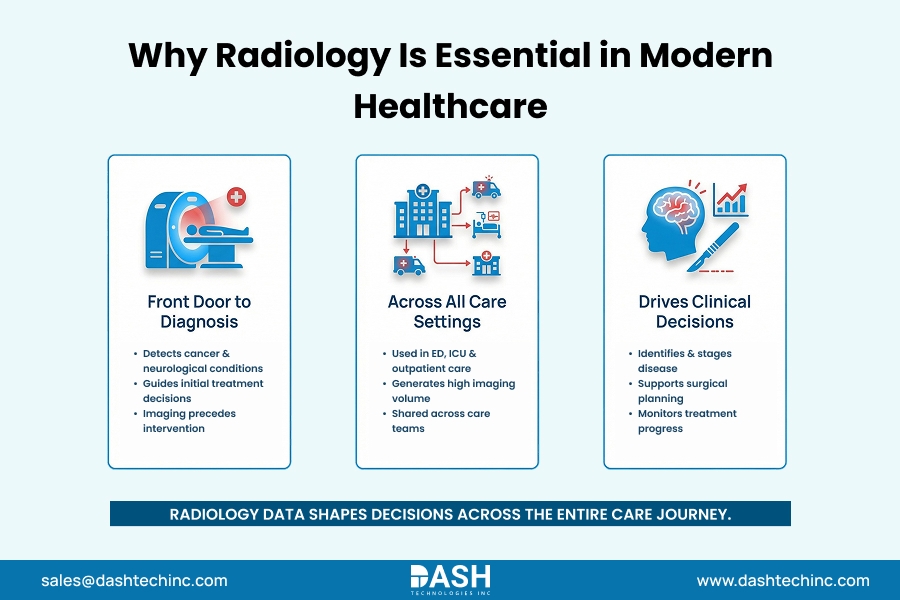
The role of radiology in healthcare is foundational to diagnosis, treatment planning, and longitudinal care management. It is not just a support desk that takes pictures. Diagnostic imaging data dictates what doctors do next for almost every patient in the building.
- Radiology as the Front Door to Diagnosis
Imaging shows clear evidence for serious conditions. This includes cancer & neurological disorders. Doctors require this data before they can safely recommend a treatment plan. The scan result always precedes medical intervention.Imaging establishes the first data-driven decision point in most patient journeys. - Imaging Data Across Inpatient and Outpatient Care
Scans occur in every care setting. Diagnostic imaging data connects emergency, inpatient, and outpatient encounters into a continuous clinical record. This creates a massive data footprint that different medical teams must access to manage patient care. - Radiology’s Influence on Clinical Decision-Making
Imaging does more than identifying a disease. Surgeons review these files to decide if they need to operate. Specialists use the scans to see if the current treatment cycle is working. Radiology data influences clinical workflows upstream, shaping decisions before interventions begin. This makes radiology output the most critical data type in any clinical workflow.
The Scale and Complexity of Radiology Data
Radiology data volume grows faster than most other clinical data types, increasing storage and integration complexity. Medical imaging Data is messy and structurally complex. If a hospital wants its radiology data digital health projects to actually work, it must organize this noise:
- DICOM Images: A single study generates thousands of individual files packed with hidden metadata.
- Radiologist Reports: Doctors usually type unstructured free text instead of logging clean, searchable data points.
- Hidden Details: Files are buried under machine specs, patient IDs, and random measurements.
The challenge isn’t generating this data; it’s making it usable. Volume without structure creates noise, not insight.
Why Digital Health Transformation Depends on Radiology Data?
Digital health transformation in healthcare requires radiology data integration that connects imaging systems with enterprise analytics, AI engines, and clinical workflows. Imaging is usually the missing piece in most hospital systems. Proper radiology data integration pushes hospital tech past basic billing databases and directly into actual patient care.
Imaging data feeds these specific areas:
- AI models: Developers train most diagnostic AI tools entirely on scans. If the file quality is poor, hospitals cannot actually deploy these programs.
- Clinical workflows: Doctors make faster decisions when they access scan results immediately. This eliminates the waiting period between the radiology department and the treating physicians.
- Analytics and population health: Longitudinal imaging data show disease progression. It reveals treatment responses, too. This data also highlights trends in populations that others can’t capture.
- Read More


Comments
Post a Comment